How to Read a Baseball Card: Numbers, Parallels, Serials & the Back Explained
A beginner's guide to reading a baseball card: what the card number means, how to decode parallels and foil, what serial numbers like /25 mean, how to date a card from the back, and how the RC shield and inserts work.
Shortcut: want cards in hand to practise on? The pack roundup ranks the cheapest ways to get some tonight.
Best Baseball Card Packs to Buy in 2026 →What This Guide Recommends
The picks referenced below, at a glance — our verdict, current availability, and who each one suits.
Budget boxes with grading-worthy upside

Kids, gifts, and Topps nostalgia
Protecting your collection

Grading submissions and serious shipping
Budget boxes with grading-worthy upside
Kids, gifts, and Topps nostalgia
Protecting your collection
Grading submissions and serious shipping
Every Card Tells You What It Is
Pick up any baseball card and it is quietly telling you almost everything you need to know about it — the player, the set, the year, whether it is a rookie, how rare it is, and how it stacks up on the checklist. New collectors just have not learned to read the signals yet. Once you have, you can pick up a card cold and, in about ten seconds, know what you are holding and roughly where it sits in the hobby’s pecking order.
This guide is that decoder ring. We will walk the front of the card, then flip to the back (the half most beginners ignore, even though it is where the year and the checklist number hide), then decode the two things that actually drive scarcity — parallels and serial numbers — and finish with how to read a card’s condition the way a grader does. It pairs directly with our companion explainer on whether your card is a rookie card; this one covers everything else printed on the cardboard. If you are brand new, read it alongside the beginner’s guide to collecting. And if you want cards in hand to practise on, our best baseball card packs roundup ranks the cheapest rips in stock tonight.
Reading the Front
The front is the billboard. From top to bottom, here is what is actually on it and what each piece means.
The set and year branding. Somewhere on the front — usually a corner or along an edge — the card announces its set: “2026 Topps Series 1,” “Bowman Chrome,” “Topps Heritage,” and so on. The set name plus the year is the single most important identifier, because it tells you which product the card came out of. If you are not sure which brand you are looking at, our guide to Topps vs. Bowman vs. Panini breaks down who makes what, and Topps Chrome vs. Topps flagship explains the chrome-versus-paper difference you will run into constantly.
The player and team. Obvious, but note the team logo: MLB-licensed cards (Topps/Fanatics) show real team logos and uniforms. If the logos are airbrushed out, you are likely looking at an unlicensed product — a meaningful distinction for value.
The RC shield. On any card from 2006 to today, scan the lower corners and the bottom edge for a small “RC” shield. If it is there, the card is an officially designated rookie. This one badge is worth more attention than anything else on the front — a real rookie of a star can be worth many times a common card of the same player. We cover the full rules, and the “first Bowman is not a rookie” trap, in is my card a rookie card?.
The finish. Is the card plain paper (flagship), mirror-shiny (Chrome/refractor), or a colored-border variant? The finish is your first clue that you might be holding a parallel rather than a base card — more on that below.
Autographs and relics. An on-card or sticker autograph, or a swatch of jersey/bat embedded in the card (a “relic” or “patch”), marks a hit — a premium card pulled at long odds. These are almost never base cards.
Reading the Back (Where Beginners Miss the Good Stuff)
Flip the card. The back is duller to look at and twice as informative.
The card number. Most modern cards print their number on the back — “#150,” “#US200,” “#BD19.” That number is the card’s slot in the set checklist; every copy of that card shares it. It is not a rarity marker — it is how you look the card up. Numbers with letter prefixes tell you the subset: “US” usually means the Update series, “BD” means Bowman Draft, and so on.
The copyright/date line. Look for a small line, often beginning with ©, that includes the production year. This is how you date a card — and how you catch a reprint. A retro insert can show a 1952 design but a current copyright year; the copyright line does not lie. For pre-2006 cards with no RC shield, this year-dating is exactly how you confirm a vintage rookie (match the card year to the player’s first mainstream base card).
Stats and bio. The year-by-year stat grid, the write-up, height/weight/bats-throws — useful for identifying the player and, on vintage, for narrowing down which year the card belongs to.
The stat grid dates a card too — one year behind. This is the step beginners get backwards, so be precise about it: the last complete season in the stat block is normally the season before the set year, not the set year itself. The reason is scheduling, not design. Flagship product ships before or during the season it is named for — our release calendar has 2026 Topps Series 1 arriving in early February 2026, before a single 2026 game has been played, so there is no 2026 stat line to print on it. So read the grid and then add one: a stat block ending in 2025 points at a 2026 card. Treat it as a cross-check rather than the answer, because later-cycle and reprint product breaks the pattern — where the grid and the copyright line disagree, the copyright line wins.
The set/print info. Fine print naming the set and manufacturer, and sometimes a “card X of Y” that hints at the base set size.
Decoding Parallels: Reading Rarity by Color
Here is the concept that unlocks modern cards. A base card is the standard version. A parallel is the same card reprinted with a different look — a colored border, a foil wash, or a refractor rainbow — and, crucially, a smaller print run. Manufacturers build a tiered “rainbow” of parallels for each card, and the color tells you roughly how scarce it is.
The exact color ladder changes by set, but the pattern is universal:
- Common parallels — everyday colored or foil versions, often unnumbered. A step above base.
- Numbered parallels — the same design but serial-numbered to a set quantity (see below). The lower the number, the scarcer.
- Super-short-print parallels — gold, black, “superfractor,” and 1-of-1 tiers, printed in tiny quantities and chased hard.
If a card looks like a normal player’s card but has an unusual border color or a mirror finish, assume it is a parallel and check for a serial number. For the full color ladder — the Topps flagship paper tiers, the Chrome and Bowman refractor rainbow, and how print runs set rarity — see our dedicated reference on parallels and refractors explained.
Serial Numbers: The Real Rarity Signal
A serial number — printed as 12/25, 07/99, or the holy grail 1/1 — is the definitive scarcity marker. The number after the slash is the total print run; the number in front is which copy you have.
/999or/499— limited, but not truly rare./99,/25— genuinely scarce; these carry real premiums.1/1— the only one in existence. A “one-of-one,” the rarest a card can be.
Do not confuse this with the card number on the back. The card number (#150) identifies the card in the checklist and every copy shares it; the serial number (/25) tells you how many of this exact parallel were made. A base card has a card number but no serial number. When people ask “is my card rare?”, the serial number — or the absence of one — is the honest answer.
Reading Condition Like a Grader
Two copies of the identical card can be worth wildly different amounts based purely on condition, so learning to read a card’s surface is half the game. Graders (PSA, SGC, BGS, CGC) score four things — learn to eyeball them and you will stop overpaying:
- Centering. Is the image evenly framed, or shifted so one border is fat and the opposite is thin? Off-center is the single most common grade-killer, especially on vintage. Measure it before you ever pay a grading fee with our free card centering tool.
- Corners. Sharp and crisp, or soft/fuzzy/dinged? Corners show wear first.
- Edges. Clean, or chipped and rough (foil and Chrome cards chip easily)?
- Surface. Free of scratches, print lines, and creases? Tilt under light to check.
If a card grades well it is worth slabbing; if not, it usually is not. Our grading guide walks the process, the grading cost breakdown tells you whether the fee is worth it, and the grading ROI calculator runs the math for your specific card.
Putting It All Together
Say you pull a shiny card of a young star. Reading it, top to bottom: the front says “2026 Topps Series 1,” so you know the product; you spot a small RC shield in the corner, so it is an official rookie; the border is a mirror-blue you have not seen on the base cards, so it is a parallel — and sure enough, the front reads 18/50, telling you only 50 exist and this is number 18. You flip it, confirm the card number and the copyright year on the back, then check centering and corners. In under a minute you have gone from “some card” to “a serial-numbered /50 rookie parallel in sharp condition” — which is exactly the kind of card worth protecting and possibly grading.
That is the whole skill: front for identity and rookie status, back for the number and the year, color and serial for rarity, surface for condition.
What to Do Once You Can Read a Card
Reading cards fluently changes how you buy, sell, and chase:
- Know what your cards are worth. Once you can identify the exact card — set, number, parallel, condition — you can look up real sold prices instead of guessing. Our guide to what your cards are worth shows how to read eBay sold comps the right way.
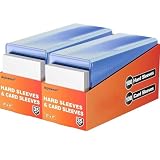
- Protect the good ones. Any card worth keeping goes into a penny sleeve and then something rigid, the moment it comes out of the pack. Two different products do that job and they are not interchangeable: a sleeve-and-hard-sleeve bundle (200 soft plus 200 hard sleeves — hard sleeves, not toploaders) is the bulk workhorse, while a toploader-and-sleeve bundle gets you the classic rigid toploader. Anything you actually intend to submit goes into a semi-rigid holder instead — that is the format the graders ask for. See the full store-and-protect guide.
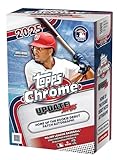
- Pull your own — and match the product to what you just learned to read. The two things this guide taught you to spot come out of different releases, and mixing them up is the most expensive beginner mistake there is. RC-shield rookies and serial-numbered refractor parallels live in chrome flagship product like the Topps 2025 Chrome Baseball Update Series Value Blaster Box — it chromes the Topps Update checklist, so every player in it has already debuted. 1st Bowman prospect cards — the ones with no RC shield, precisely because the player has not debuted — only come out of Bowman, such as the 2026 Bowman blaster or the draft-class 2025 Bowman Draft mega box. No amount of ripping Chrome Update produces a 1st Bowman, and no Bowman prospect card carries an RC shield. Our Topps Chrome vs. flagship guide covers which chrome release holds which rookie.
- Practise on the back. A sealed junk-wax-era repack such as 300 Old Vintage Topps Baseball Cards is the cheapest way to drill the half of this guide most people skip. Cards from that era carry no RC shields at all — the logo did not exist until 2006 — and essentially no serial numbering, so the copyright line and the stat grid are the only things that date them. That is exactly the skill the front of a modern card lets you avoid learning.
- Chase the real ones. When you want the marquee rookies rather than a lottery pull, a graded single like the 2018 Topps Baseball #700 Shohei Ohtani Rookie Card Graded PSA… removes all doubt — the slab confirms the card, the grade, and the rookie status at once. The best rookie cards to invest in ranks the ones worth owning.
The Bottom Line
A baseball card is a dense little document. The front gives you identity — set, year, player, the RC shield, the finish. The back gives you the card number (its slot in the checklist) and the copyright year (how you date it and catch reprints). Parallels and serial numbers tell you scarcity — a colored or foil version with a /25 on it is a different animal from the base card. And the condition — centering, corners, edges, surface — decides what any of it is actually worth. Learn to read all four, and no card, from a junk-wax common to a serial-numbered rookie parallel, will ever be a mystery in your hands again.
WHAT TO BUY AFTER THIS GUIDE
Best Baseball Card Packs to Buy in 2026
The best baseball card packs to buy right now — flagship retail packs, value and fat packs, premium blasters, guaranteed-hit packs, and genuine vintage wax. Honest picks for every kind of rip.
Shop these on eBay
Graded singles and slabs trade on eBay, not Amazon — these open live listings so you can check real sale prices before you decide to buy a slab or grade your own.
Recommended Products for This Guide

Topps 2025 Chrome Baseball Update Series Value Blaster Box
Amazon →

300 Old Vintage Topps Baseball Cards in Sealed Pack Lot Gift Package
Amazon →
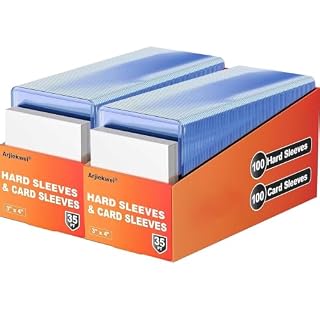
Card Sleeves Hard Plastic, Arjiekwei 3"X 4" Trading Card Holder, 35PT | Baseball Cards Protectors for Sports Football Game Cards (200 Hard Sleeves + 200 Soft Sleeves)
Amazon →

Semi Rigid Card Holders & Sleeves for PSA, CGC, BGS & TAG Trading Card Grading Submission
Amazon →

2018 Topps Baseball #700 Shohei Ohtani Rookie Card Graded PSA 10 Gem Mint
Amazon →