Baseball Card Parallels & Refractors Explained: Color Tiers, Print Runs & Which Box Prints Which
A collector's reference to baseball card parallels and refractors: the Topps flagship color ladder, the Chrome/Bowman refractor rainbow, how serial numbers set rarity, and a box-by-box map of the channel-exclusive parallels — Diamante, Sepia, Raywave, Logofractor, Holo Foil, Green Flash — showing which single format prints each one.
What This Guide Recommends
The picks referenced below, at a glance — our verdict, current availability, and who each one suits.

Early access to new releases
Budget boxes with grading-worthy upside

Prospecting on a budget
Early access to new releases
Budget boxes with grading-worthy upside
Prospecting on a budget
Parallels Are Where the Hobby’s Scarcity Lives
Open a pack and most of what you pull is base cards — the standard checklist, the everyday cardboard. Then, every so often, a card catches the light differently: a gold border, a rainbow shine, a tiny “25/50” stamped in the corner. That is a parallel, and parallels are the engine that drives modern card values. Understanding the ladder — which colors are common, which are scarce, and how print runs stack up — is the difference between tossing a genuinely scarce card in a shoebox and knowing exactly what you are holding.
This is the reference page that our how-to-read-a-baseball-card guide points to when it teases parallels and print runs. That guide decodes everything printed on a card; this one goes deep on the single most confusing — and most valuable — topic: the parallel rainbow. If you are brand new, start with the beginner’s guide to collecting first, then come back here.
What a Parallel Actually Is
A parallel is a variant of a base card. Same player, same photo, same year and set — but with a different finish and, crucially, a smaller print run. Topps might print hundreds of thousands of a base card and only 99, or 25, or 5 copies of a given parallel of that same card. The rarer the parallel, the fewer exist, and (player demand permitting) the more it is worth.
Two things separate a parallel from a base card:
- The look. A colored border, a foil sparkle, a printed pattern, or a chrome refractor shine that the plain base card does not have.
- The serial number. Most parallels above the entry tier are numbered to their print run — printed right on the card as something like
07/99or1/1. Base cards are never serial-numbered, so a serial number is a dead giveaway you are holding a parallel. (For the full explainer on what/25and1/1mean, see the serial-number section of the reading guide.)
An insert is a different animal — a separately themed subset with its own name and design, not a recolor of a base card. This page is about parallels; inserts are their own topic.
The Topps Flagship Color Ladder (Paper)
Topps flagship — Series 1, Series 2, and Update — is printed on standard card stock, so its parallels are colored-border parallels rather than refractors. The ladder climbs from common to one-of-one. Exact print runs shift a little year to year and Topps tweaks the color names, so treat this as the shape of the ladder rather than a frozen spec sheet — always read the serial number on the actual card:
- Base — the standard card, unnumbered, printed in huge quantities.
- Rainbow Foil — a foil-front parallel, usually unnumbered but noticeably scarcer than base; the entry-level “shiny.”
- Gold — numbered to the year (a 2026 Gold is
/2026). The first widely chased numbered tier. - Vintage Stock / themed parallels — mid-tier numbered parallels (Independence Day, Father’s/Mother’s Day, Memorial Day camo, and so on), typically numbered from the low hundreds down to around
/50. - Black — a scarce numbered tier, usually in the ~
/70range depending on the set. - Red — very scarce, often
/5. - Printing Plates (1/1) — the cyan, magenta, yellow and black aluminum plates used to print the card; four exist per card, each a 1/1.
- SuperFractor-equivalent 1/1s — flagship’s true one-of-ones sit at the top of the ladder alongside the plates.
The practical takeaway: on paper Topps, color = rarity, and once you get above Gold almost everything is serial-numbered. If you want to pull these yourself, rip current flagship — the 2026 Topps Series 1 blaster states its retail-exclusive Holo Foil parallels on the box itself — and see our Series 1 set review for what the parallel structure looked like in the most recent flagship release.
One caveat the ladder above hides, and the next section is about: the color a parallel wears is only half of what defines it. The other half is which box it came out of.
The Chrome & Bowman Refractor Rainbow
Want the ladder for one specific set rather than the general shape? The Bowman Chrome checklist explorer lists every parallel in the set with its exact print run and which box format it comes out of.
Chrome-based products — Topps Chrome, Topps Chrome Update, and Bowman Chrome — are printed on chromium stock with a reflective coating. Their parallels are refractors: tilt one under a lamp and it throws a rainbow shine like an oil slick. This is the parallel family most collectors mean when they talk about “the rainbow,” and it climbs a color ladder of its own:
- Base Chrome — the standard chrome card, still shiny but not a refractor.
- Refractor — the plain refractor; the whole card takes on that signature rainbow burn. The entry rung.
- Prism / colored refractors — purple, blue, aqua, green, and similar, each numbered and each scarcer as the color climbs (blues and greens are typically numbered in the low hundreds down to ~
/99). - Gold Refractor — usually
/50, a major step up in desirability. - Orange Refractor — often
/25. - Red Refractor — often
/5, one of the scarcest colored tiers. - SuperFractor (1/1) — the peak of the chrome rainbow: a single, heavily-textured one-of-one. Every chrome card has exactly one SuperFractor, and for a star it is a grail card.
The difference between a plain refractor and a base chrome card trips up new collectors constantly: both are shiny, but only the refractor throws a full rainbow when rocked in the light. A base chrome card shines flat and white-ish; a refractor bends the light into color. When in doubt, hold both under a lamp side by side — the refractor announces itself.
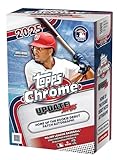
To chase the chrome rainbow yourself, rip a chrome product, and match the product to the class of player you want. The 2025 Topps Chrome value box is the main-run chrome set — the flagship checklist reprinted on chromium, so it is where the season’s Series 1 and Series 2 rookies get their Chrome cards. The 2025 Chrome Update value blaster covers the other half of the year: the players who debuted after the flagship checklists locked, which in a strong call-up year is where the most-chased Chrome rookie cards actually live. And 2026 Bowman is the home of 1st Bowman prospect refractors — the first chrome cards of players before they reach the majors. Our Topps Chrome vs. flagship guide explains why the chrome version of a rookie carries a premium over the paper one.
Which Box Prints Which Parallel
Here is the part almost no guide spells out. A large share of modern named parallels are not rungs on a rarity ladder at all — they are channel exclusives, defined by the box you bought rather than by how scarce they are. Buy the same set in a hanger box instead of a blaster and you are chasing a different parallel entirely. Manufacturers print this on the outside of the packaging, because it is a reason to buy that specific box.
Every parallel named below is taken from the sealed packaging of a product currently in stock and linked from this page. It is the map we wish we’d had on the shelf:
| Named parallel | The box that prints it | Format |
|---|---|---|
| Holo Foil + Spring Training Variations | 2026 Topps Series 1 blaster | Retail blaster |
| Green | 2026 Bowman blaster | Retail blaster |
| Diamante | 2025 Topps Update Series Baseball Hanger Box 59 Total Cards | Hanger box |
| Sepia — 2 guaranteed per box | 2025 Stadium Club mega | Mega box |
| Raywave — 2 base guaranteed per box | 2025 Chrome Update mega (Fanatics) | Mega box |
| Green Flash | 2025 Panini Select hobby blaster | Hobby blaster |
| Logofractor (batterman-logo refractor) | 2025 Topps Chrome Logofractor Edition | Retail box |
| Chrome-stock bonus-pack parallels | 2026 Topps Series 1 mega | Mega box |
| Fat-pack-only parallel | 2026 Topps Series 1 fat pack | Fat / cello pack |
| Retail-exclusive parallels (72-card config) | 2026 Series 1 exclusive blaster | Retail blaster |
| Image + nickname variations, retro chrome refractors | 2025 Heritage High Number hobby box | Hobby box |
Four things fall out of that table, and each one changes what you buy.
1. Color names do not travel across brands. “Green” in 2026 Bowman retail and “Green Flash” in 2025 Panini Select are different parallels from different companies in the same season, and neither tells you anything about the other’s scarcity. The color ladders earlier on this page hold within a product line; the instant you cross from Topps flagship to Chrome to Bowman to Panini, the names reset. Read the color as a name, not as a rank, until you know which set you are holding.
2. Most of these are retail-only — hobby money cannot buy them. Diamante, Sepia, Raywave, Logofractor, Holo Foil, the fat-pack parallel and the mega’s chrome-stock parallels are all retail or channel exclusives. There is no price you can pay for a hobby box that produces them. This is the single most-misunderstood thing about the hobby-versus-retail split: hobby buys you guaranteed autographs and relics, retail buys you parallels that do not exist in hobby. Our hobby vs. retail guide covers the rest of that trade, including how many cards each format actually holds.
3. Two of these are guaranteed; the other nine are chases. The Stadium Club mega states 2 Sepia parallels per box and the Fanatics-exclusive Chrome Update mega states 2 base Raywave parallels per box — printed counts, not odds. Every other row on the table says some version of “look for.” That distinction is worth more than any rarity ladder when you are standing in an aisle: one box tells you what you are getting, the other sells you a lottery ticket. Neither is wrong, but only one of them is a known quantity.
4. The format itself is a parallel gate. 2026 Topps Series 1 alone appears four times on that table — blaster, exclusive blaster, mega, and fat pack — each with a different exclusive. Picking a format is not just choosing how many cards you get; it is choosing which chase you are entering. If a specific parallel is what you want, the configuration is the decision, not the set.
What this table deliberately does not say
Print runs. Manufacturers name these parallels on the packaging but do not print their production numbers there, and we do not publish numbers we cannot source. Serial-numbered versions state their own print run on the card face — that number, on the card in your hand, is the only one worth trusting. Several of the parallels above (Holo Foil and the retail Green parallels in particular) are typically unnumbered, which means their scarcity is set by print quantity nobody discloses. Treat an unnumbered parallel as “scarcer than base, unknown by how much,” and see how to read a baseball card for where the serial number lives on the card.
Configurations also change year to year. Every row above is tied to the specific year printed in its product name for exactly that reason — a 2025 hanger exclusive is no guide to what a 2027 hanger will carry.
How Print Runs Set Rarity — and Where They Don’t
The serial number is the clearest rarity signal in the hobby. A card numbered /5 is, by definition, twenty times scarcer than the same card numbered /99. So on paper, the ladder is simple: lower number, scarcer card, higher ceiling.
But print run is only the ceiling. What fills that ceiling is demand, and demand is mostly about the player. A superstar rookie’s Gold refractor /50 will crush a journeyman veteran’s Red /5, because thousands of people want the first and almost nobody chases the second. Three things decide where inside the rarity ceiling a card actually prices:
- The player. A young superstar or a hot rookie beats scarcity almost every time.
- The color’s desirability. Collectors covet certain colors (reds, golds, SuperFractors) beyond what the raw print run implies.
- Condition and grading. A refractor’s mirrored surface shows scratches and chipping badly, so graded, high-grade parallels command a real premium. See our grading guide and the grading-cost breakdown to decide whether a parallel is worth submitting.
A good real-world example of the scarcity-plus-star formula is this 2018 Topps Baseball #698 Ronald Acuna Jr. Rookie Card Graded… — the card is serial-numbered 17/49, so the print run is stated on the card itself, and it pairs that scarcity with an elite player and a top grade. Low print run, elite player, graded gem: that combination is what collectors actually pay up for. Contrast it with an 2018 Topps Baseball #700 Shohei Ohtani Rookie Card Graded PSA… — a card with no serial number at all, whose scarcity comes entirely from the grade rather than the print run. Both are expensive; only one of them is scarce because Topps decided in advance how many to make. To look up what a specific parallel is worth, use eBay sold comps as described in our what’s-my-card-worth guide.
Protecting Parallels and Refractors
Because refractors and numbered parallels carry the value, they also deserve the protection. A chrome refractor’s mirror surface scratches if it so much as slides against another card, and a corner ding on a /5 can erase most of its premium. The moment you pull a real parallel:
- Sleeve it immediately — a soft penny sleeve goes on first so nothing ever touches the chrome surface, then a hard sleeve or rigid holder over the top. Sleeve first, rigid second, always in that order.
- For your best serial-numbered hits, step up to a 35pt UV ONE-TOUCH magnetic holder — two-piece rigid acrylic with a magnetic closure and UV inhibitors, so it seals the card, shows the serial number, and displays the refractor shine without exposing the surface. This is the holder made for numbered parallels; the sleeves above are what gets it there safely.
For the full storage playbook, see our guide on storing and protecting cards.
The Short Version
- A parallel is a rarer, dressed-up version of a base card; base cards are never serial-numbered, so a serial number means parallel.
- On paper Topps flagship, color is the ladder: base → Rainbow Foil → Gold → numbered tiers → Black → Red → 1/1.
- On Chrome and Bowman, the same idea runs through refractors: base chrome → Refractor → colored refractors → Gold → Orange → Red → SuperFractor 1/1. If it throws a rainbow, it is a refractor.
- Print run sets the ceiling; the player sets the price. A star rookie’s mid-tier parallel beats a common’s 1/1.
- Many named parallels are channel exclusives, not rarity rungs. Diamante comes from a hanger box, Sepia from a Stadium Club mega, Raywave from a Fanatics mega, Logofractor from one retail box. If you want a specific parallel, the configuration is the decision — and only two of the eleven on our map state a guaranteed per-box count.
- Read the serial number, tilt the card under a lamp, and protect anything that shines.
Once parallels click, the rest of the hobby’s pricing logic falls into place. Next, if you have not yet, learn whether your card is a rookie card — a rookie and a rare parallel is the combination the whole hobby chases.
Shop these on eBay
Graded singles and slabs trade on eBay, not Amazon — these open live listings so you can check real sale prices before you decide to buy a slab or grade your own.
Recommended Products for This Guide

Topps 2025 Baseball Series 1 Factory Sealed Value Box - Baseball Complete Sets
Amazon →

Topps 2025 Chrome Baseball Update Series Value Blaster Box
Amazon →

2025 Topps Chrome Baseball Logofractor Edition Box
Amazon →

2026 Bowman Baseball Blaster Trading Card Box (Look for Retail Exclusive Green Parallels)
Amazon →

2025 Topps Stadium Club Baseball Mega Trading Card Box (2 Sepia Parallels Per Box)
Amazon →

2025 Topps Chrome Update Series Baseball Mega Box (Fanatics Exclusive) Trading Card Box (2 Base Card Raywave Parallels Per Box)
Amazon →

Topps Update Series 2025 - Caja para colgar 59 tarjetas en total
Amazon →

2026 Topps Series 1 Baseball Blaster Box, Look for Retail Exclusive Holo Holo Foil Parallels & Spring Training Variations
Amazon →

2018 Topps Baseball #698 Ronald Acuna Jr. Rookie Card Graded PSA 10 | Gem Mint - Bat Pointing Up
Amazon →

2018 Topps Baseball #700 Shohei Ohtani Rookie Card Graded PSA 10 Gem Mint
Amazon →

Ultra PRO - 35pt Cards UV ONE-TOUCH Magnetic Holder - Premium Trading Card Display Case, Magnetic Closure, Standard Size Card Protector
Amazon →
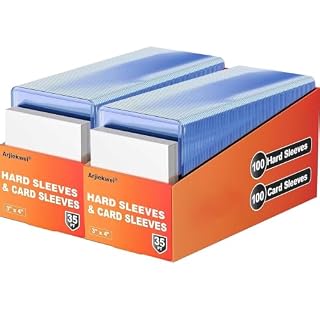
Card Sleeves Hard Plastic, Arjiekwei 3"X 4" Trading Card Holder, 35PT | Baseball Cards Protectors for Sports Football Game Cards (200 Hard Sleeves + 200 Soft Sleeves)
Amazon →
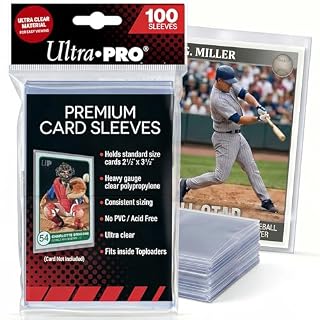
Ultra Pro Premium Clear Card Sleeves, 2.5" x 3.5", 100 Pack | Soft acid-free, non-PVC polypropylene sleeves protect standard Pokémon, MTG, baseball and football cards.
Amazon →