How to Sell Baseball Cards: Get the Most Money for Your Collection
Where and how to sell baseball cards in 2026 — eBay vs card shops vs auction houses vs consignment, fee math, listing tactics that raise prices, and the prep that protects your sale.
What This Guide Recommends
The picks referenced below, at a glance — our verdict, current availability, and who each one suits.

Every collector’s first supply purchase

Protecting your collection

Displaying and protecting premium raw cards
Every collector’s first supply purchase
Protecting your collection
Displaying and protecting premium raw cards
Selling Is a Skill, Not an Event
Every collection eventually sheds cards — upgrades, focus changes, inheritances, or just the realization that 4,000 commons are storage, not assets. The difference between a careless sale and a skilled one is routinely 30-50% of the proceeds. This guide is the skilled version.
If you haven’t valued the collection yet, start with our step-by-step valuation guide — selling before pricing is how heirlooms get away for gas money.
Step 1: Sort Into Sale Tiers
Every selling decision flows from a simple triage:
- Key cards (your highest-value pieces): sell individually. These carry the collection’s value and deserve individual effort.
- Mid cards (modest but real value): sell in themed lots (player lots, team lots, set runs) or trade them.
- Bulk: thousand-count boxes, local-only. Shipping bulk loses money.
- Maybe-grade candidates: stars in genuinely sharp condition — run the grading math before listing raw.
Step 2: Pick the Right Channel
eBay — the default for key cards
The deepest buyer pool and the honest price-setter. The craft:
- Auction vs Buy It Now: auctions for genuinely hot cards (competition does the work); BIN with Best Offer for everything else.
- Photos sell cards. Natural light, front and back, corners visible, any flaw shown honestly. Buyers pay more for sellers they trust — and honest flaw photos prevent returns.
- Title like a buyer searches: year, brand, card number, player, parallel, grade. “2018 Topps #700 Shohei Ohtani RC PSA 10” — not “AMAZING OHTANI CARD WOW.”
- Price from sold listings, not active ones. Wishes aren’t comps.
Local card shops — the speed play
Instant cash, zero fees, zero shipping risk — at wholesale. A fair shop pays 40-70% of realistic retail depending on how liquid the card is. Bring your sold-listing research; dealers respect sellers who know the comps and lowball the ones who don’t.
Auction houses & consignment — the premium play
For vintage stars, rare slabs, and your highest-value cards, the major auction houses and consignment platforms reach bidders eBay doesn’t. Fees vary, but competitive bidding on genuinely scarce material routinely beats self-listing. This is the right channel for the inherited 1950s shoebox with real stars in it.
Marketplaces to treat carefully
Facebook groups and forums have real buyers and real scammers. Sell there only with established communities, payment protection, and tracking on everything. No friends-and-family payments to strangers, ever.
Step 3: Prep Like a Professional
Presentation is pricing. Before listing anything:
- Sleeve and case every card you photograph. A card shown in a clean sleeve or Ultra PRO - 35pt Cards UV ONE-TOUCH Magnetic Holder - Premium… photographs better and signals a careful owner — careful owners get higher bids.
- Never clean or “improve” a card. Surface work is alteration; buyers and graders both detect it.
- Stock shipping supplies before you list: sleeves and toploaders, cardboard, bubble mailers, painter’s tape. Scrambling after a sale is how cards ship badly.
Step 4: Ship Like You Mean It
The standard that survives the mail: sleeve → toploader (painter’s-taped) → cardboard sandwich → bubble mailer → tracking. Insure valuable shipments, and add signature confirmation for your most valuable ones. Pack every card with the same care regardless of its value; your feedback score is the asset that raises every future sale.
The Tax Note Nobody Mentions
Selling platforms report proceeds; meaningful profits on cards are taxable (collectibles have their own rates). Keep records of what you paid where you can. For an inherited collection, the basis generally steps up to value at inheritance — worth a conversation with a tax professional before liquidating anything large.
The Bottom Line
Triage by value, match each tier to its channel, present professionally, ship bulletproof. And before any of it: know what you’re holding — then sell the stars individually, the middle in lots, and keep one card you love. Collections should end with a keepsake, not just a payout.
Recommended Products for This Guide
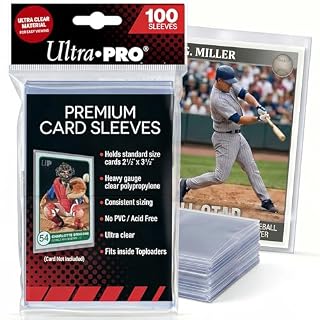
Ultra Pro Premium Clear Card Sleeves, 2.5" x 3.5", 100 Pack | Soft acid-free, non-PVC polypropylene sleeves protect standard Pokémon, MTG, baseball and football cards.
Amazon →

Card Sleeves Hard Plastic, Arjiekwei 3"X 4" Trading Card Holder, 35PT | Baseball Cards Protectors for Sports Football Game Cards (200 Hard Sleeves + 200 Soft Sleeves)
Amazon →

Ultra PRO - 35pt Cards UV ONE-TOUCH Magnetic Holder - Premium Trading Card Display Case, Magnetic Closure, Standard Size Card Protector
Amazon →